
The Turkish purge fails in VCAT

Image

erdogan 090517Since last year’s failed coup attempt against Turkish president Recep Tayyip Erdogan (pictured), his regime has ousted 4,238 judges and prosecutors, purged 95,000 public servants, jailed at least 81 journalists and sought to remove one sitting member from a VCAT domestic building case.

Yes, all extraordinary numbers but let’s focus here on that last and most local statistic. It made it on to the public record only yesterday via VCAT’s decision in Mackie v Republic of Turkey [2017] VCAT 620.

VCAT is currently 25 hearing days (!) into a domestic building dispute. Another 10 hearing days are anticipated. In it, a builder is claiming payment for constructing a house in Toorak Road, Toorak, for the Turkish government. The Republic of Turkey has  counterclaimed and also joined the project’s architect to the action.

Things cannot be going well for the Turks because, together with the architect, they used a long adjournment last month to seek an order from VCAT’s president to have the VCAT senior member hearing the case removed from it.

That senior member is not identified in yesterday’s decision. His removal was sought  on two alternative grounds.

Member “ill-suited”

The first was that the member concerned was “ill-suited” to this particular building case and accordingly the Tribunal should be reconstituted pursuant to s 108 of the Victorian Civil and Administrative Tribunal Act.

Evidence in support of the reconstitution application was by affidavit derived,  among other things,   from approximately 2,000 pages of transcript. The complaints against the member included,  among much else,  his own statement during the hearing that he had “little experience” in construction law,  his apparent unfamiliarity with some building concepts and terminology (such as the difference between a civil engineer and a structural engineer),  and a comment during the litigation describing it as  “a nightmare”.

Apprehension of bias

The second limb of the reconstitution application was that the member had created a reasonable apprehension that he was biased in favour of the builder.

Evidence in support of this contention was said to include some stern words from the member to the architect’s principal witness about the architect’s repeated failure to give responsive answers in cross-examination,  the poor success rate by the architect and Republic’s respective counsel in making objections to evidence when compared to the builder’s counsel’s equivalent run rate,   and the member’s solicitude for the health and comfort of the builder’s 74 year-old, laryngitis-suffering witness while giving vive voce evidence.

All of these complaints were in support of a contention that a fresh member should replace the incumbent for the remainder of the hearing. It seems that the  architect (who made the formal application) and the Republic (which supported it) were hoping that the current hearing would then trundle on,  with the new VCAT member relying for his/her decision in large part on a truckload of transcript and no direct memory of what was said in evidence during the marathon hearing.

Decision – unsuitability

VCAT President Justice Greg Garde’s decision is unlikely to improve President Erdogan’s view of the rule of law as administered by a securely-tenured and independent judiciary.

Garde J dismissed the argument that the member was ill-suited. Among other things, he stated that cherry-picking certain remarks by the member from 25 days’ worth of transcript was not persuasive about the competency of the member when it was conceded that no single remark was, of itself, demonstrative of the member’s alleged unsuitability.

As to the member’s professed inexperience, Garde  J stated a VCAT member is entitled to be unfamiliar with industry jargon and concepts. Indeed, members in such a situation should not be bashful about it – they are under a duty to speak up and seek assistance from counsel as appropriate.

Decision – apprehended bias

Applying the High Court’s two-step test in Ebner v Official Trustee in Bankruptcy (2000) 205 CLR 337,   Garde J dismissed the bias argument too.

He stated that VCAT members are entitled to take up issues with counsel and the parties “and express robust views and opinions without prejudgment” and that in this case there was not sufficient evidence that the member did not “apply the same standards to all witnesses or act appropriately to progress the hearing and the determination of the proceeding….  I hold that if a fair-minded lay observer were asked whether he or she might reasonably apprehend that the senior member might not bring an impartial mind to the resolution of the issues and the questions which arise in the proceeding, the answer would be ‘no’.”

Garde J dismissed the application and ordered that the hearing resume next Monday before the same senior member who has heard it to date.

Four thoughts occur to me on this:

  1. VCAT members can be removed under s.108 of the VCAT Act during the running of a case but neither professed unfamiliarity with the subject matter nor a robust approach from the bench will of themselves be sufficient grounds for a successful application.
  2. If you are going to make a s.108 application best make it early. An application too far into the hearing is much more likely to expose the applicant to failure (and potentially grave costs consequences too).
  3. Isn’t it cheering to live under the rule of law where humble builders can take on foreign governments secure in the knowledge that the tribunals of law and fact won’t be distracted in their deliberations by the prospect of mass (or even targeted) judicial sackings?
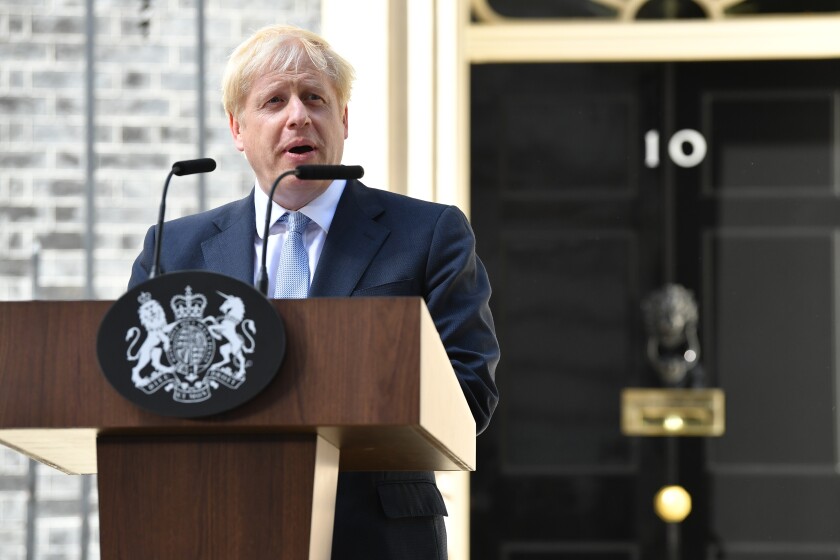
  4. Blogging about a case involving the Republic of Turkey is a tenuous but sufficient excuse to reprint a famous limerick (below) about the censorious President Erdogan. It won its author, Boris Johnson, the prize in The Spectator magazine’s 2016 ‘President Erdogan Offensive Poetry Competition’.  (You will recall that Johnson subsequently became Britain’s  Foreign  Secretary and, as such, today remains in charge of his nation’s diplomatic relations with Turkey.) Enjoy.

There was a young fellow from Ankara

Who was a terrific wankerer

Till he sowed his wild oats

With the help of a goat

But he didn’t even stop to thankera.

ADDENDUM # 1 (2017)

VCAT Senior Member Robert Davis delivered his decision in the substantive litigation on 25 August 2017. The decision is Mackie v Republic of Turkey & Tectura [2017] VCAT 129. The Republic of Turkey was ordered to pay the builder $693,824.58 and its counterclaim against the builder was dismissed. The Turks did have a win against the architect. It was ordered to pay the Republic of Turkey $119,664.65.

(Presumably the next issue for the builder will be actually collecting on the judgment. Some successful VCAT litigants find this a problematic exercise against even Victorian residents. Registering and enforcing a VCAT decision against a distant authoritarian sovereign state with an elastic approach to the rule of law is likely to prove a challenge indeed.)

ADDENDUM # 2 (2019)

Boris Johnson has also survived President Erdogan’s displeasure. The limerick master became the UK’s prime minister in July 2019 and was resoundingly returned as prime minister at the British general election in December 2019.
ADDENDUM # 3 (2021)

This litigation originally started in the County Court in 2013.  In 2014, the parties agreed that it should be stayed pursuant to s. 57 of the Domestic Building Contracts Act 1995. The builder then applied to VCAT to determine the dispute. It then ground on through VCAT, a single judge appeal in the Supreme Court and into the Court of Appeal on the common assumption that VCAT had indeed been the correct jurisdiction. But then the Court of Appeal itself questioned this assumption. In Republic of Turkey v Mackie Pty Ltd [2021] VSCA 77 it ruled that VCAT lacked jurisdiction to hear and determine the primary proceeding because the subject matter was a matter ‘affecting consuls or other representatives of other countries’ within the meaning of s. 75(ii) of the Constitution and VCAT is not a court of the state. It said the VCAT decision should be set aside and the primary dispute referred back to the County Court where the County Court could also determine the question of the costs of all those wasted intervening years in VCAT, the Supreme Court and the Court of Appeal.

(I wonder if this saga will restore President Recep Tayyip Erdogan’s respect for due process and the rule of law?)


What do Linda Evangelista and Dale Boucher have in common?

Linda E 020916

Dale B narrow 3 020916

What do Linda Evangelista and Dale Boucher have in common?

Slightly more than you think. They are both recognized authorities within their fields on costs disclosure.

The supermodel famously said, “I don’t get out of bed for less than $10,000 a day”.

Less famously, the Commissioner for Uniform Legal Services Regulation and CEO of the Legal Services Council in March this year signed into operation (see s 407 of the Uniform Law) his pronouncements on the need for single figure costs estimates under the Uniform Law. (See the Legal Services Council’s Guideline and Direction – Costs Estimate – LSC 01/2016 and its almost identical CULSR twin, Guideline and Direction – Costs Estimate – CULSR 01/2016.)

Ms Evangelista was succinct and presumably did not need to elaborate.

Mr Boucher was less concise. And, as if the Uniform Law jigsaw needed still more pieces, he accompanied his pronouncements with three “worked examples” of how lawyers are required to provide “single figure” estimates to their clients for the purposes of the Uniform Law.

Look at the examples closely. Identifying a “single figure estimate” in any of them is like identifying a snowflake in a blizzard. Easy. And meaningless.

Nevertheless it seems that Mr Boucher considers single figure estimates are compulsory, even if they are as a consequence contrived, almost certain to be superseded, or premised upon tenuous guesses about the likely course of litigation.

Note particularly paragraph 8 of both Guidelines and Directions. Estimates may be provided as a “range of figures PROVIDED [original emphasis] that the law practice … always gives the single figure estimate of the total legal costs in the matter that section 174(1)(a) requires” [my underlining].

My copy of the Uniform Law contains the following version of s 174(1)(a):

A law practice—

(a)       must, when or as soon as practicable after instructions are initially given in a matter, provide the client with information disclosing the basis on which legal costs will be calculated in the matter and an estimate of the total legal costs…

I will give a prize to the first reader who can find in s174(1)(a) the requirement for a “single figure estimate” to which Mr Boucher is referring in his Guidelines and Directions. And not just any prize. It will be a colour, A4-sized photo portrait of either Ms Evangelista or Mr Boucher – your choice.

I have blogged about this silliness before but I was reminded of it at a seminar yesterday on the Uniform Law. Three speakers. Engaged audience. Useful discussion. But beyond the single slide of Linda Evangelista on display, not much clarity.


Client complaints – a tool kit for solicitors

Some lawyers have never received a complaint from a client.

Or so they say.

Such prodigies, liars and recent arrivals to the profession are vastly outnumbered by the rest of us.

This might explain the big audience of solicitors who turned out this week at a seminar Gordon & Jackson hosted on the twin topics of client complaints and recent cases dealing with the Civil Procedure Act.

I delivered a paper on the first topic. The paper’s section headings will give you the flavour of its content:

  1. Complaints are inevitable;
  2. Try not to take complaints personally (and get help, of whatever variety);
  3. Categories of complaint under the Uniform Law;
  4. Categories of complaint beyond the Uniform Law;
  5. Your LPLC insurance – the good news and the bad;
  6. Avoiding complaints in the first place; and
  7. Professional standards scheme – you are a participant, aren’t you?

My colleague Monika Paszkiewicz spoke on the Civil Procedure Act. Her paper includes reference to Judd J’s recent observations (in ACN 005 490 540 Pty Ltd v Robert Frederick James Pty Ltd [2016] VSC 217 at paras 18 -19) that solicitors who threaten each other too willingly with personal costs applications under the Civil Procedure Act might themselves be breaching the very statute they are invoking.

Client complaints and the Civil Procedure Act have obvious potential overlap for litigation solicitors. Download the two papers (combined as a single document) here and file them away with your Civil Procedure Act resources.

Enough already? The LSC’s new guidelines on estimating legal costs for disclosure purposes

Precisely what costs estimate does the Uniform Law require of lawyers? The Legal Services Council’s first official guideline and direction attempts to answer this question.

It has an almost identical twin (here) issued the same day by the Commissioner for Uniform Legal Services Regulation. The two guidelines and directions are accompanied on the Legal Services Council website by a document containing three “worked examples” of what our regulators consider to be acceptable costs disclosure.

Together these three documents are intended to give guidance to the costs disclosure obligations imposed on Victorian and NSW lawyers by s 174(1) of the Uniform Law. The documents might improve your estimates but they are unlikely to improve your estimation of the new Uniform Law regime.

First, a quick refresher on the Uniform Law itself. It requires lawyers’ costs to be fair and reasonable (s 172) and voids lawyers’ costs agreements wherever, inter alia, costs have not been properly disclosed to the client (s 178(1)). The starting point for that requirement is the much-maligned s 174 –

174  Disclosure obligations of law practice regarding clients

(1)  Main disclosure requirement

A law practice—

(a)  must, when or as soon as practicable after instructions are initially given in a matter, provide the client with information disclosing the basis on which legal costs will be calculated in the matter and an estimate of the total legal costs; and

(b)  must, when or as soon as practicable after there is any significant change to anything previously disclosed under this subsection, provide the client with information disclosing the change, including information about any significant change to the legal costs that will be payable by the client —

together with the information referred to in subsection (2).

The two new guidelines and directions are substantively identical with the effect that their shortcomings and the demands on the reader’s time are duplicated but their meaning is not.

Both guidelines and directions state that –

  • the estimate required by s 174 “is a reasonable approximation of the total costs a client is likely to have to pay in the matter for which instructions have been given, expressed as a single figure, from time to time…”[emphasis added]
  • the provision of additional information to clients beyond that required by s 174 “should be encouraged” and that further information about likely costs might be “expressed as a single figure or as a range of figures, PROVIDED [original emphasis] the law practice always gives the single figure estimate of the total legal costs in the matter that s 174(1)(a) requires.”
  • “It is permissible and may be desirable to preface a single figure estimate with the word ‘about’ to reflect the fact that the figure is an estimate and is not a fixed fee.”

Note the brave but dubious assertion that s 174(1)(a) of the Uniform Law requires “a single figure estimate.” Now turn to the “worked examples” which accompany the guidelines and see how the three examples illustrate how the “single figure estimate” concept can (and it seems should) be routinely subverted.

The first example is a debt recovery matter. It begins with instructions to the lawyer only to issue a letter of demand (for which a single figure estimate is given) and culminates (after a series of presumably ascending single figure estimates) in litigation including a crossclaim whereupon the “lawyer indicates that the [most recent] estimated figure might vary by +/- 10 per cent”.

This is surely incongruous. It seems that the Legal Services Council believes that the pro-active lawyer who advised her client on day one that a debt claim might resolve quickly after a letter of demand or might run all the way to the conclusion of complex litigation and therefore cost in the range of, say, $500 – $15,000 depending on those variables will have comprehensively breached her disclosure obligations under s 174 of the Uniform Law. On the other hand, the dullard solicitor who plods blindly down the road towards litigation,giving his client only a series of single-figure cost estimates to the conclusion of the very next step, is supposedly satisfying the obligations of s 174.

There is more. Each of the three “worked examples” published with the guidelines and directions includes an estimate with a stated percentage deviation range. There is something ridiculous about lawyers being prohibited from estimating costs to clients as a range (e.g. $850 to $1150) while being simultaneously encouraged to provide precisely the same information expressed as a mathematical formula (e.g. $1000 +/- 15 per cent).

There is a warning that the percentage deviation figures are “an illustration only and do not alter the obligation to provide a single figure estimate nor is it intended to encourage an unreasonably broad estimate”. This invites the question of what percentage deviation is “unreasonably broad.” It seems from one of the examples that “plus or minus 15 per cent” might be reasonable. What about plus or minus 30 per cent? Or 50 per cent?  Or 100 per cent? As judged by whom? When?

Alas, for the moment we can only guess.

Finally, a word about the legal status of these official pronouncements. Under s 407 of the Uniform Law, the Legal Services Council and the Commissioner for Uniform Legal Services may each issue “guidelines or directions”. Local regulatory authorities (eg the Victorian Legal Services Commissioner and Victorian Legal Services Board) must comply with such directions (s 407(1)) and hence the directions have the status of subordinate legislation. But the status of the guidelines incorporated in the same documents is less clear. Presumably the guidelines and the worked examples will have persuasive effect at least with the various costs assessors required to adjudicate on the adequacy of lawyers’ costs disclosure.

For more on the costs provisions of the Uniform Law see this introductory paper and these blog posts:


Waiter! There’s a Chinese restaurant in my easement!

The lawyer who acts for himself is commonly thought to have a fool for a client. But what about the lawyer who acts for the company of which he is a director and shareholder?

A Melbourne solicitor who acted in several capacities for a private company must now be pondering this question following the non-party indemnity costs order made against him personally in 1165 Stud Road Pty Ltd v Power & Ors (no 2) [2015] VSC 735. (The case was decided just before Christmas but somehow was published on Jade only this week).

The solicitor was (indirectly) one of the main shareholders in 1165 Stud Road Pty Ltd (“Stud Rd”). He was also its company secretary and one of its two directors. He dealt on its behalf in several controversial transactions and also acted as its solicitor in both litigation and conveyancing contexts.

In 2007, Stud Rd bought a block of land in Rowville. The block’s only road access was via an easement. But two years earlier a neighbour had built a Chinese restaurant on that easement.

In 2012, Stud Rd sold its landlocked block for $2.3 million. Its s 32 statement neglected to mention the slight issue of the obstructed easement. That sale then fell over before settlement and Stud Rd sued the purchaser and also the owner of the offending restaurant (“Palms”).

Early in the litigation, Palms demanded security for costs from Stud Rd. Stud Rd’s solicitor/company director/company secretary/etc. wrote back refusing and saying that Stud Rd had ample equity in the Rowville land and could afford to meet any likely costs order against it. That much was true.

But things changed when Stud Rd subsequently sold the land afresh. The new sale wasn’t disclosed to the other litigants nor was the new contract of sale discovered pursuant to Stud Rd’s continuing discovery obligations. Stud Rd also omitted to mention to the other parties its distribution of the net sale proceeds to various of its own related interests.

As the trial loomed closer, Stud Rd went into voluntary liquidation. The proceeding was discontinued before trial as a consequence.Palms had nevertheless spent over $300,000 preparing for the trial. There being no prospect of recovering those costs from the liquidated company, Palms applied instead for non-party costs orders against Stud Rd’s solicitors and its two directors personally.

Palms succeeded – but only against the director who had also acted as the company’s solicitor. His multi-faceted role as the company’s director, shareholder AND external solicitor was said by Vickery J to constitute “exceptional circumstances”.
Here is a taste:

138. It is clear that [the solicitor], in conducting the Proceeding as a solicitor on behalf of the Plaintiff, in respect of which he was not only a director but also, through a corporate vehicle, a shareholder, was in breach of paragraphs 9.2 and 13.4 of the Professional Conduct and Practice Rules 2005 and placed himself at serious risk of being in breach of paragraph 13.1 of the rules. As a solicitor in active practice, [the solicitor] ought to have been aware of the effect of these Rules.
139. This placed [the solicitor] in a conflict of interest and rendered his conduct of the litigation on behalf of the Plaintiff improper.
140. This was so despite the fact that, during the life of the Proceeding, neither Palms nor its solicitors … ever once raised the issue of conflict of interest or demand that [the solicitor], or any of the firms at which he worked, cease to act in the Proceeding due to his conflict.
141. Reference is made to paragraphs 9.2, 13.1 and 13.4 of the Professional Conduct and Practice Rules 2005 published by the Law Institute of Victoria, which was tendered in evidence:
9.2 A practitioner must not accept instructions to act or continue to act for a person in any matter when the practitioner is, or becomes, aware that the person’s interest in the matter is, or would be, in conflict with the practitioner’s own interest or the interest of an associate.
….
13.1 A practitioner must not act as the mere mouthpiece of the client or of the instructing practitioner and must exercise the forensic judgments called for during the case independently, after appropriate consideration of the client’s and any instructing practitioner’s wishes where practicable.
13.4 A practitioner must not unless exceptional circumstances warrant otherwise in the practitioner’s considered opinion:
13.4.1 appear for a client at any hearing, or
13.4.2 continue to act for a client,
in a case in which it is known, or becomes apparent, that the practitioner will be required to give evidence material to the determination of contested issues before the court.

142. It is likely that [the solicitor] was not able to bring an independent mind to decisions made on behalf of the Plaintiff in the conduct of the Proceeding by reason of his conflict of interest and it is likely that a number of the decisions he made were infected with this conflict.
143. An order for costs against a non-party is not dependent upon, but can take into account, any improper conduct by the non-party….

The upshot was that the solicitor personally [cf the firm that employed him] was ordered to pay Palms’ cost of the proceeding on a standard basis until the date of the undisclosed sale and on an indemnity basis thereafter.
A final point is worth noting. Palms’ application was brought partly in reliance upon s 29 of the Civil Procedure Act [as discussed in Yara v Oswal blogged here] but that limb of the application was held to be statute-barred as it had not been made before the proceeding was “finalised” as required by s 30. However, this missed deadline did not matter for Palms as the Court held that it had power to order the costs against the solicitor under s 24 of the Supreme Court Act and/or in its inherent jurisdiction.

The lessons from this case? Four occur to me.

  • Acting for yourself and/or interests close to you is perilous.
  • A lawyer and client with apparently aligned commercial interests might still have a conflict of interest if the lawyer’s forensic judgment is thought to be compromised as a result of that close association.
  • Lawyers should not act in matters in which they are likely to be material witnesses.
  • And finally, never be too reassured by the fact that no conflict of interest is suggested by your opponents.

A Christmas present buried deep in the Civil Procedure Rules?

Christmas prezzies sorted? Self-executing orders complied with? Default judgment averted? Holiday booked?

Maybe some of your Christmas deadlines are less pressing than they appear.

Civil litigators should remember at this time of year that the Civil Procedure Rules allow them a bonus 16 days over the Christmas / New Year break to comply with most orders and Court rules containing time limits.

In each of the Supreme, County and Magistrates’ Court rules, time stops running because of Rule 3.04(1). The two alternative formulations of Rule 3.04(1) have identical effect. The Supreme and County Court version provides:

In calculating time fixed by these Rules or by any order fixing, extending or abridging time, the period from 24 December to 9 January next following shall be excluded, unless the Court otherwise orders.

An example. A defendant who files an appearance today (Friday, 11 December 2015) would normally as a consequence be required (by Rule 14.02) to serve a defence within 30 days thereafter (ie by Monday, 11 January 2016). But at this time of year that 30 days actually expires in 46 days’ time on Wednesday, 27 January 2016 after allowance is made for the end-of-year suspension of time under Rule 3.04(1) and also the Australia Day holiday on 26 January 2016. (See Rule 3.01(5) as to the effect of public holidays and other days when the courts’ offices are closed).

The Federal Court is even more generous. Its equivalent is Rule 1.61(5) which provides:

If the time fixed by [these Rules or by an order of the Court] includes a day in the period starting on 24 December in a year and ending on 14 January in the next year, the day is not to be counted.

That was that good news. Now the bad news.

Time pauses for some litigation purposes over the break but not for others.

In Kuek v Victoria Legal Aid [1999] VSC 158 the plaintiff sought to rely upon Rule 3.04(1) to commence an appeal which was otherwise out of time under the Magistrates’ Court Act. He failed. Beach J held that Rule 3.04(1) as a rule of Court could not have the effect of extending a statutory deadline unless the statute concerned (or some other) gave the Court express power to vary that deadline.

So if you have a statutory demand or a potential appeal quietly ticking away on your desk as Christmas approaches, Rule 3.04(1) offers no yuletide peace and goodwill.

But if you have no such time bombs on your desk – Merry Christmas, Happy Chanukah, a Splendid Silly Season and a very happy new year to you.

Uniform Law on costs

Are you a lawyer who likes getting paid?

Then if you are in Victoria or New South Wales you should know the provisions of the new Uniform Law as it relates to lawyers’ costs.

Here is a paper I have prepared on the subject.

I have also done two earlier blogs on the Uniform Law:

Estimating the costs of an impending litigation for disclosure purposes

You are a solicitor about to open a new potential litigation file. It might go all the way to the High Court. But it also might settle in response to your very first letter of demand.

The only real certainty about it is that the new Uniform Law requires you to give your client a written disclosure “as soon as practicable after instructions are initially given” which must include “an estimate of total legal costs.”  You must then promptly update that disclosure ever thereafter when there is a “significant change to anything previously disclosed” (see s 174 of the Uniform Law).

What does that all mean? This early in the life of the Uniform Law, nobody can be certain but if you get your disclosure wrong (initially and/or subsequently) your costs agreement is likely to be rendered void as a consequence (see s 178(a) of the Uniform Law) and collecting payment will become slow and problematic as a consequence.

So get your costs disclosure right.

Here are some suggestions (but no promises) as to how to go about it.

  1.  Start with one of the Law Institute of Victoria’s disclosure template documents available here. By all means modify the LIV’s wheels to suit your particular situation but don’t reinvent them altogether.
  2. Make your costs estimate sensible. Your client might be dismayed with the bottom line estimate but everyone will be happier to see that figure upfront in an estimate than to be ambushed by something similar in the final bill.
  3. Make the costs estimate transparent to your client. An Excel spreadsheet where you (and the client) can manipulate the variables might be a great way to start. (Help yourself to the template version below.)
  4. Be candid with your client as to the vagaries of both litigation and your estimate. Maybe your client’s case will be quick and simple. But maybe it will become the Battle of the Somme instead, complete with counterclaims, interlocutory skirmishes, third and fourth parties and some stern appellate action to top it all off. Your guess at the very start is possibly only slightly better than your client’s. Don’t pretend otherwise.
  5. Sign the client up to a costs agreement. Again, be guided by the Law Institute precedents.
  6. Having done all of the above, test your client’s comprehension of the strategy and costs being embarked upon. File note it. (Seriously, file note it. You might need those file notes years down the track if your client suggests that language/stress/other issues impeded his/her comprehension of the costs disclosure sufficiently to constitute a breach by you of s 174(3) of the Uniform Law.)
  7. When your costs disclosure then seems complete – remind yourself that it probably isn’t. Your ongoing disclosure obligations endure until the file is actually closed.

Some thoughts on the accompanying spreadsheet
I have drawn the spreadsheet below as an aide-memoire for solicitors attempting to estimate future solicitor/own client costs for Uniform Law disclosure purposes. Inevitably, it will need modification for each actual case.

For template purposes, I have done it for a hypothetical commercial case in the Victorian County Court. The rates I have utilized are derived from the County Court scale (which is, of course, 80 per cent of the Supreme Court scale – see this blog.)

I have made the following viable (but not inevitable) assumptions which might or might not apply to your case. (Change the variables and add or delete new row items to suit your particular client’s anticipated case.)

  • The spreadsheet is for a prospective plaintiff;
  • There is no conditional costs agreement (eg no win/no fee) arrangement proposed;
  • There will be a single claim against a single defendant;
  • There will be no counterclaim, third party claim or similar;
  • There will be no pleading amendments by either side;
  • All directions will be made ‘on the papers’ and by consent;
  • There will be a single contested interlocutory application;
  • There will be a single mediation;
  • There will be a four-day trial with a reserved judgment handed down on an eventual fifth day with short argument that day as to costs, interest and the final form of the Court’s orders;
  • There will be two expert witnesses, (eg an accountant and an engineer) for the plaintiff and no lay witnesses for the plaintiff requiring payment for their attendance;
  • Everything will happen in Melbourne without anyone claiming circuit fees, travel expenses or similar;
  • The barrister will do an initial advice as to merits, draw the statement of claim, do an advice as to evidence, remain involved incidentally throughout the matter and will charge the equivalent of 10 hours’ preparation for each anticipated full day in Court;
  • The solicitor and the single (senior) junior barrister will each charge the client the maximum County Court scale rates applicable to them as of November 2015 (ie solicitor $302.40 per hour and the barrister $432 per hour / $4316 per day in Court) (plus GST in both cases); and
  • There will be no appeal.

Note that because of the technical limitations of WordPress (which hosts this blog) the Excel / Numbers functions formerly embedded in the table below have been lost in posting it here. You can resurrect the table and its functions for your own use by –

  • copying and pasting the table from this blog back into your own Excel / Numbers spreadsheet;
  • restoring the functions manually (eg in Excel you make the formula in D2 read “=PRODUCT(B2:C2)” and then replicate it for the remaining rows;
  • insert/delete rows and increase/decrease the rates and duration estimates to suit the circumstances; and
  • use “AutoSum” to calculate the total.

You might even email a version of your spreadsheet to your client so he/she can also manipulate some of the variables. Emphasize to your client that you are providing an estimate – not a quote and that the defining characteristic of commercial litigation is that it never goes entirely according to the script.

Some parting cautions
Three final issues occur to me that might be prudently flagged as part of your disclosure to your client. (Neither is apparent in the Uniform Law or my spreadsheet.)

  • Most litigation settles well before trial. Some settles during the running of the trial. Of the relatively few cases that run to judgment, some are appealed but most are not. The combined effect of these disparate possibilities is that your initial estimate might legitimately undershoot or overshoot the eventual total that you charge your client drastically.
  • Losers will usually be ordered to pay the winner’s costs. This means that the figure in your compulsory Uniform Law estimate is likely to be substantially wrong in practical net terms. The final, post-trial, net figure your client pays for lawyers’ involvement in the litigation is likely to be much higher or lower than your Uniform Law estimate, depending on whether your client is on the right or wrong end of a substantial costs order.
  • Once embarked upon, litigation can seldom be unilaterally abandoned without adverse costs consequences – see for example Victorian Supreme Court Rule 63.15 and County Court Rule 63.15 about the cost presumptions upon the filing of a notice of discontinuance. This makes dangerous the widely-held view that costs can and should be estimated to prospective litigants as a sequence of distinct figures. Lay clients might reason from an overly segmented disclosure that if they are not enjoying the litigation ride, they might easily and cheaply, unilaterally quit along the way as if alighting from a bus at one of its usual stops. Alas, life and litigation just isn’t as simple as the authors of the Uniform Law apparently believe.

What guarantees do I offer about the spreadsheet? None but any bouquets or brickbats about it are welcome all the same.

Category of legal work estimated time estimate in hours (assume 1 day =10 hours) hourly /unit charge approx total charge
Pre-litigation investigation & negotiation (solicitor) 20 $302 $6,048
Brief to advise (barrister) 10 $432 $4,320
Writ & statement of claim (barrister) 10 $432 $4,320
Filing fee $814 $814
Brief as to evidence (barrister) 10 $432 $4,320
Preparation for and attendance at mediation (solicitor) 6 $302 $1,814
Preparation for and attendance at mediation (barrister) 10 $432 $4,320
Mediator’s fee (half share) $2,000 $2,000
Mediation venue hire (half share) $300 $300
Interlocutory application (solicitor) 10 $432 $4,320
Interlocutory application (barrister) 10 $432 $4,320
Fees for Expert # 1 – report and appearance as expert witness 30 $362 $10,860
Fees for Expert # 2 – report and appearance as expert witness 30 $362 $10,860
Solicitor’s general preparation (including attendances on client, experts, counsel and court, correspondence, offers of compromise, discovery, notices to admit, expert witness notices, preparation of court book etc) 100 $302 $30,200
Trial preparation (barrister) 45 $432 $19,440
Setting down fee $962 $962
Hearing fee (per day of trial from day 2) 3 days $500 $1,500
Solicitor instructing in Court 45 $302 $13,590
Barrister – appearance at trial 40 $432 $17,280
Barrister – taking judgment 5 $432 $2,160
Misc disbursements (eg process servers, company searches, couriers, subpoenas etc) $2,000 $2,000
Trial transcript (4 days @$2250 per day) $10,000 $10,000
TOTAL ESTIMATE $155,748 (plus GST)

Our dishevelled new Uniform Law

What a shambolic creature is the new Legal Profession Uniform Law.

I attempted to translate its provisions relating to costs disclosure and recovery in a presentation for the Goulburn Valley Law Association this week. I reckon I did a reasonably accurate job. I could tell this because my attentive audience seemed to be suitably irritated and confused by the end.

Anybody who claims an entirely confident understanding of the Uniform Law has obviously not read it properly.

By itself, the Uniform Law is frequently unintelligible without reference to the local (ie state) law which adopts it.Because of this, the Uniform Law in Victoria is actually a schedule to the zippily-named Legal Profession Uniform Law Application Act 2014.

This unattractive combination adds up to a combined total of approximately 570 pages and 120,000 words. And that’s before you reach for a third necessary document, the Legal Profession Uniform General Rules 2015 (and disregard other related subordinate legislation).

Between them, these three documents are ostensibly organised into various chapters, parts, divisions and schedules. Indeed, they seem to have more chapters than the Freemasons, more parts than Shakespeare, more divisions than Stalin and more schedules than V/Line. But you can’t be entirely sure because the centrepiece document, the Uniform Law itself, has no index whatsoever and the pagination doesn’t help.

That is bizarre in any legislation but particularly in something that presumably is meant to be accessible to, among others, disgruntled clients looking as lay people to the law for guidance about their rights and obligations vis-a-via their lawyers.

But given the sheer bulk of the Uniform Law package, it must be extraordinarily precise, right?

Wrong again.The mandarins responsible for administering it (for Victorians that means a combination of the Sydney-based Legal Services Council and the Melbourne-based Victorian Legal Services Board and Commissioner) have separate websites, each featuring information sheets for clients and for legal practitioners.

Alas, some of the Victorian Legal Services Board and Commissioner’s info appears to relate to superseded legislation and not to the Uniform Law at all.

And at least one of the Legal Services Council’s flyers makes the confident assertion that the Uniform Law “does not permit” lawyers to express estimated future costs to their clients as a range.

This “cost-estimates-must-not-be-expressed-as-a-range” view is an urban myth also gaining currency at high levels in Victoria.

But it is wrong. (Look, at least, at s 182(3) of the Uniform Law regarding conditional costs agreements and then look (in vain) for any prohibition on cost estimates being expressed as a range in other contexts.)

In August 2015, the Victorian Law Institute Journal breathlessly introduced the Uniform Law to its readers with a cover story entitled “Empowering Clients”. What nonsense. If any lay client can navigate the Uniform Law without professional assistance (which seems improbable) he/she would almost certainly have found (substantially) the same answers much faster under the now-repealed Legal Profession Act.

How did we get lumbered with the Uniform Law? It seemed a good idea to the Council of Australian Governments back in 2009 to have uniform nationwide legislation for the various jurisdictions’ barristers and solicitors. This might have made sense if most of our lawyers and clients were dealing with each other on a nation-wide basis.

But in the real world only substantial commercial and government clients generally operate on that basis. So guess which class of clients is largely excluded from the “protections” offered to clients by the costs provisions of the Uniform Law? You guessed it. Commercial and government clients.

What a mess. Little wonder that since the idea’s inception in 2009 every jurisdiction except Victoria and New South Wales has slipped off the Uniform Law bandwagon.

But enough venting from me.

I ended my Goulburn Valley Law Association presentation this week with what I hope are four practical observations:

  • As ever, costs are only recoverable by solicitors to the extent those costs are fair and reasonable. Costs agreements are prima facie evidence only as to what is fair and reasonable – see s 172(4).
  • Solicitors’ enforcement of costs agreements against clients hinge first and foremost on adequate costs disclosure at the front end. Position yourself to be able to demonstrate this. Employing the LIV’s template disclosure and costs agreement document will be a good start.
  • Even perfect front-end written costs disclosure of itself might still not be sufficient. For the purposes of s 174 of the Uniform Law, solicitors should ideally verify and document the client’s receipt and apparent comprehension of that written disclosure. (The Law Society of NSW suggests a short (and documented) Q & A exchange with the client about the client’s expectations as to costs and strategy following delivery of the written material as one mode of evidencing the client’s apparent understanding of that material.)
  • Perfect disclosure should ensure a valid costs agreement but even a perfect costs agreement isn’t bullet-proof either – see s 199 and s 200. Because of this, there will probably be situations where it will be fastest and cheapest for solicitors to grasp the nettle and initiate a costs assessment (aka a taxation) of their own bills rather than to sue for fees only to have their proceeding stayed pending an assessment anyway. But don’t think about this idea  too long if you are a solicitor because you might be statute-barred by s 198(4) if you wait more than 12 months from the date of your bill before seeking the costs assessment.

Need further clarification? Then reach for the Uniform Law with trepidation.


More overblown than overarching: Court of Appeal smacks solis with costs orders and disallows fees

The Victorian Court of Appeal last week thumped three large law firms for work which was not “reasonable and proportionate” within the meaning of the Civil Procedure Act 2010.

What’s more, it effectively invited other Victorian courts to do likewise more often.

The case is Yara Australia Pty Ltd v Oswal [2013] VSCA 337.

Expect to hear a lot more about it. It is the first detailed appellate consideration of the Civil Procedure Act obligations on parties and their lawyers.

Many civil litigators will find it confronting reading.

The case

In Yara, three applicants sought leave to appeal against their failure to obtain security for costs. Although they were later able to point to a wider strategic purpose, the amount of security sought between the three of them ostensibly totalled about $141,000, (relatively small beer for the Court of Appeal.)

The applicants had separate but similar interests. Between them, they were represented by solicitors Clayton Utz, Herbert Smith Freehills and K & L Gates, 3 silks and 3 junior counsel.

Their application went down after a single day’s hearing. And worse was to come for the lawyers.

After refusing the application, the Court of Appeal of its own motion invited submissions on the question of whether anyone had breached their overarching obligations under the Civil Procedure Act 2010 in the conduct of the leave to appeal application.

The resulting judgment starts with two factual questions. “First, whether there was any over- representation of a party by counsel, and second, whether the material produced on the hearing of the application for leave to appeal was unnecessary or excessive.”

The Court was ultimately persuaded that the abundance of barristers did not constitute “over-representation” but it was less forgiving about the documentation filed in support of the application.

Why? Because even excluding the notices of appeal and written cases, the application book exceeded 2700 pages and 6 lever arch folders.

In their joint judgment Redlich and Priest JJA and Macaulay AJA were scathing. They variously described parts of it as “entirely otiose”, “not directly relevant”, “excessive”, “superfluous”, “entirely unnecessary” , “repetitious” and containing “a substantial amount of duplicated material”.

The Court concluded by ordering each applicant to pay the respondents’ costs of the application.

Each applicant’s solicitor was then hit with a double whammy. First, each solicitor was ordered to indemnify its client for half of the respondent’s costs “incurred as a consequence of the excessive or unnecessary content of the application books.” Secondly, each applicant’s solicitor was “disallowed recovery from the applicant of 50% of the costs relating to the application books, and costs incidental thereto.”

Some cherries from the judgment

The Court of Appeal is clearly hoping this approach will catch on.

And judges are being invited to act on their own initiative where the parties themselves are bashful.

Here are some extracts from the judgment (citations omitted) to give you its flavour.

5       The statutory regime and the obligations that are imposed by the [Civil Procedure Act] have not previously been considered in any detail at an appellate level. As the enforcement of the overarching obligations under the Act has been so little traversed, there is presently little to guide judicial officers as to the extent of the Court’s powers and the means by which parties or their legal representatives can be penalised for any contravention. We have thus addressed some of these issues at greater length than would ordinarily be necessary when a contravention of the Act is under consideration.

….

14     Each party and their solicitor and counsel have an obligation to comply with the overarching obligation. Whether any of them have breached that overarching obligation is to be determined by an objective evaluation of their conduct having regard to the issues and the amount in dispute in the proceeding. The legal practitioners’ duty is non-delegable. The obligation will override their duty to their client where the discharge of that duty would be inconsistent with the overarching obligation. The legal practitioner will not be relieved of this overarching responsibility because of the instructions of their client.

15     Legal practitioners, whether solicitor or counsel, involved in the preparation of pleadings, affidavits or other materials that are to be used in the proceeding or who provide advice as to such matters, have individual responsibilities to comply with the overarching obligation. Both solicitor and counsel also have an overarching responsibility with respect to the extent and level of their client’s representation. Each must ensure that, having regard to the issues, the extent and level of representation proposed is reasonable and proportionate. Advice or instructions given or received by legal practitioners, and instructions given by the client, may inform but will not be determinative of the question whether, viewed objectively, there has been a breach of the obligation.

         ….

18     Section 29 of the Act provides the Court with broader and more flexible powers than under the Supreme Court (General Civil Procedure) Rules 2005 (‘the Rules’) or under its inherent jurisdiction. Rule 63.23(1) enables the Court to make orders for costs against a legal practitioner who has caused costs to be incurred improperly by a failure to act with reasonable competence and expedition. However, the primary object of r ? 63.23(1) is not punitive or disciplinary but compensatory, enabling reimbursement of a party’s costs incurred because of the default of the solicitor. The primary object of the Rule is not to punish the solicitor, but to protect the client who has suffered and to indemnify the party who has been injured. Rule 63.23(1) also protects solicitors from the negligence or incompetence of counsel.

20     The Court’s powers under s 29 of the Act include the power to sanction legal practitioners and parties for a contravention of their obligations …. Moreover, the power to sanction is not confined to cases of incompetence or improper conduct by a legal practitioner. Where there is a failure by the practitioner, whether solicitor or counsel, to use reasonable endeavours to comply with the overarching obligations, it will be no answer that the practitioner acted upon the explicit and informed instructions of the client. A sanction may be imposed where, contrary to s 13(3)(b), the legal practitioner acts on the instruction of his or her client in breach of the overarching obligations.

21     …. In our view, the enactment of s 29 together with s 28(2) imbues the Court with broad disciplinary powers that may be reflected in the costs orders that are made. The Court is given a powerful mechanism to exert greater control over the conduct of parties and their legal representatives, and thus over the process of civil litigation and the use of its own limited resources.

22     The Act does not merely reaffirm the existing inherent powers of the court but provides a powerful indication of the will of the Parliament about the values sought to be achieved by the way in which cases are managed in the courts and the balances that have to be struck….

23     It is therefore somewhat surprising that despite the length of time the Act has been in force, the scope of the sanction provisions in the Act for a failure to comply with the overarching obligations has been under-utilised.

….

25     The explanation for the under-utilisation of the provisions of the Act lies in part in a false perception that these provisions and the overarching obligations do not effect any material change to the Rules and the inherent jurisdiction of the Court…. The Act creates obligations which extend beyond those in the Rules and confers upon the courts a panoply of powers not found in the Rules.

26     The Act prescribes that parties to a civil proceeding are under a strict, positive duty to ensure that they comply with each of the overarching obligations and the court is obliged to enforce these duties. The statutory sanctions provide a valuable tool for improving case management, reducing waste and delay and enhancing the accessibility and proportionality of civil litigation. Judicial officers must actively hold the parties to account.

27     Yet as we have observed, sanctions imposed for a breach of any overarching provisions have been a rarity at first instance. When no party invites the court to determine whether there has been a breach of the Act, there may be a judicial disinclination to embark upon such an own-motion inquiry for fear that inquiry as to a potential breach may be time consuming and may require the introduction of material that was not before the court as part of the proceeding. Such fears cannot relieve judges of their responsibilities….

You can probably still hear this judgment causing a hush in mega-firms the length of Collins Street (starting with their photocopying departments).